Beats vs. Talks
Alleviating Virtual Reality Sickness with Music and Podcasts
Research Focus
Investigate whether listening to music or podcasts during a virtual reality (VR) roller coaster simulation reduces VR sickness (VRS) compared to silence.
Hypotheses
H1: Listening to music reduces the severity of VRS compared to a no-sound condition.
H2: Listening to podcasts reduces the severity of VRS compared to a no-sound condition.
H3: There is no diference in VRS between the music and the podcast conditions.
Material
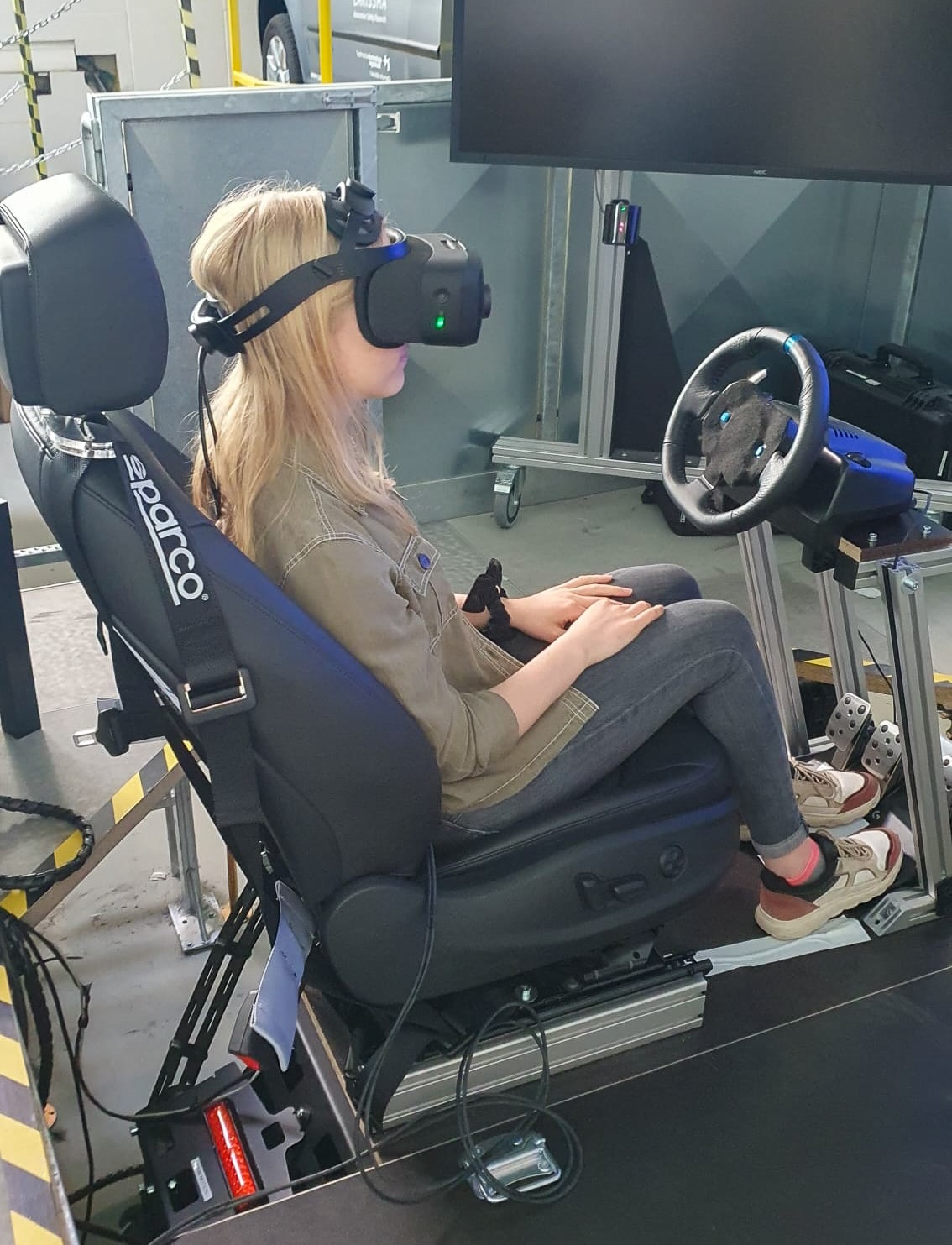
The virtual environment was a 2:30-minute roller coaster simulation (Epic Roller Coasters, “Tropical Island”) displayed through a Varjo XR-3 headset. Participants sat in an ergonomic driver's seat to simulate a passive ride. Auditory stimuli were delivered via JBL noise-cancelling headphones.
Physiological data, including electrodermal activity (EDA) and heart rate (HR), were recorded continuously using an Empatica E4 wristband.
Questionnaires, including the Simulator Sickness Questionnaire (SSQ), were completed before and after each run, along with brief post-condition feedback.
Roller coaster simulation (start)
Roller coaster simulation (after 1 min and 5 sec)
Measures
Subjective
SSQ (nausea, oculomotor, disorientation, and total score) and qualitative feedback.
Objective
Physiological data (EDA and HR) and behavioral observations.
Procedure
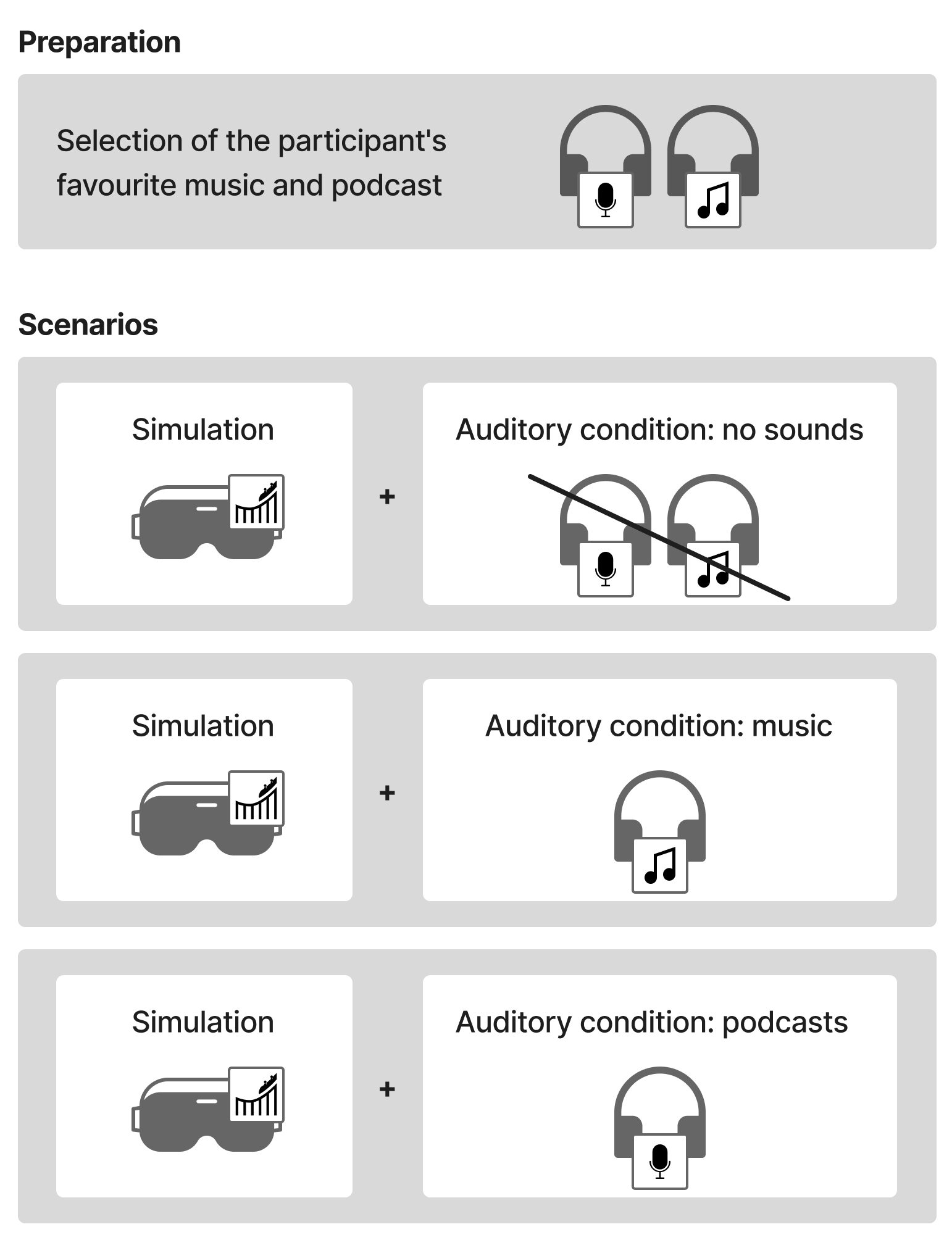
Participants were welcomed, briefed, and completed an pre-experiment SSQ.
They were provided with a VR headset, headphones, and an Empatica E4 wristband.
Each participant experienced the three auditory conditions in a counterbalanced order.
Before the music and podcast condition, they selected their preferred audio content.
After each condition, they completed a post-condition SSQ.
Five-minute breaks were taken between each condition to minimize VRS accumulation.
These were extended if VRS symptoms persisted.
The session concluded with a post-experiment interview and debriefing to gather qualitative insights.
Illustration of testing environment
Illustration of each scenario with auditory condition
Results
The study revealed clear differences in how participants experienced VRS across the auditory conditions.
Subjective findings:
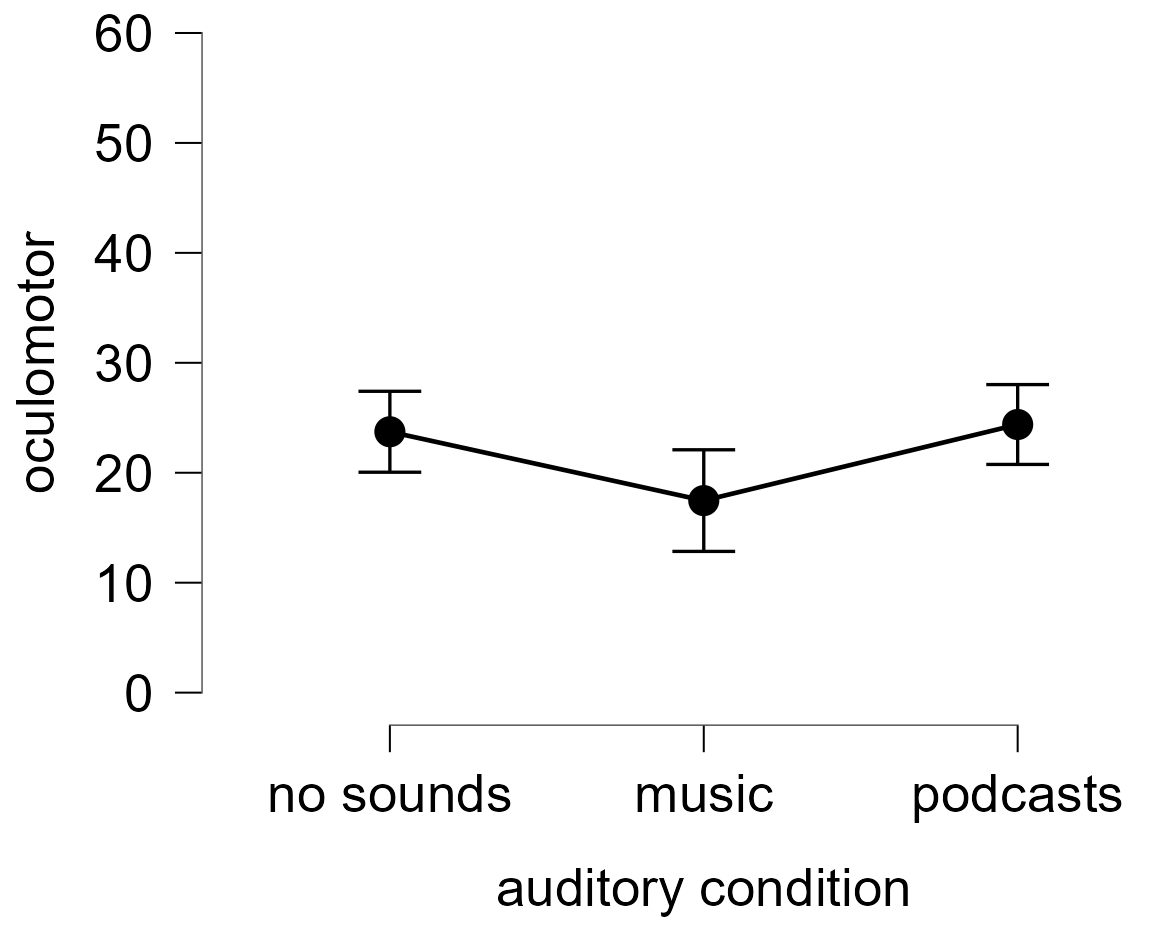
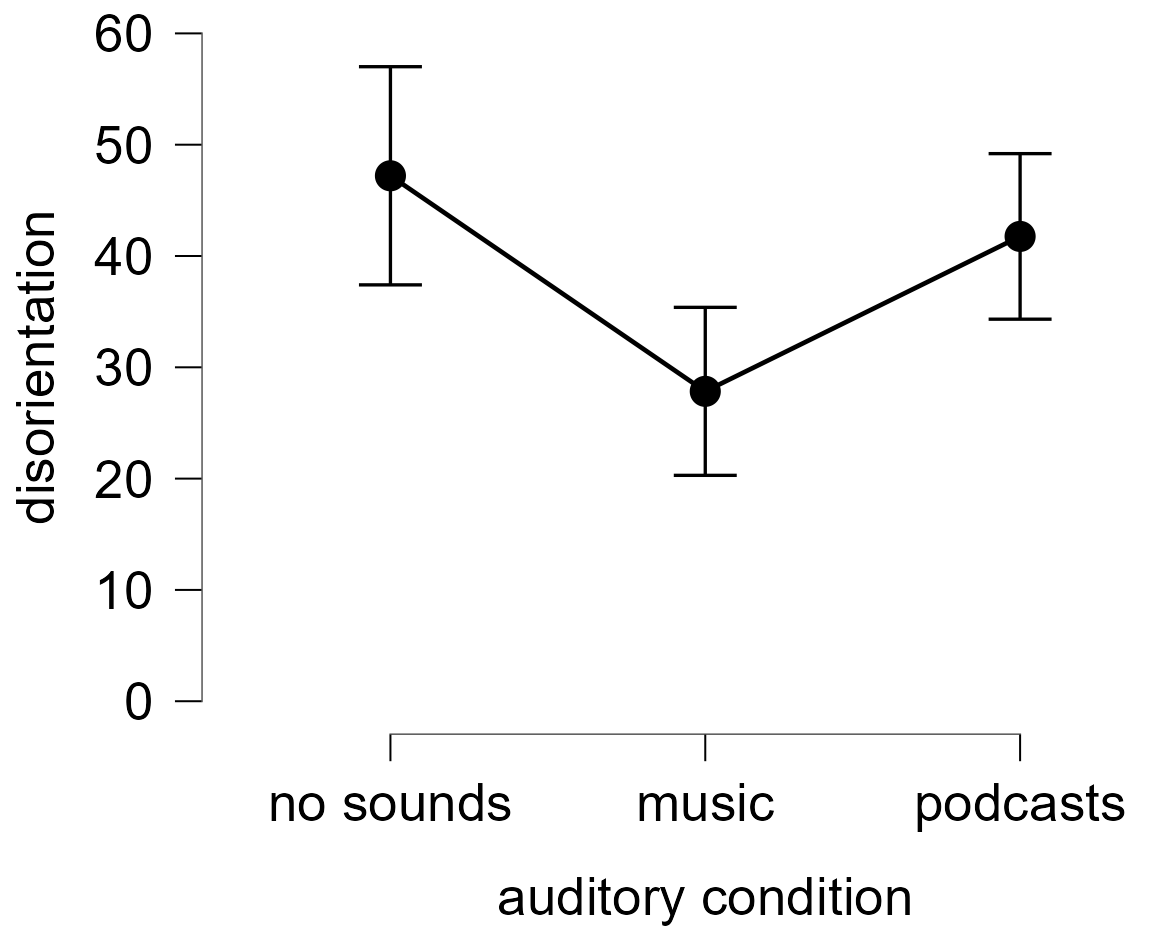
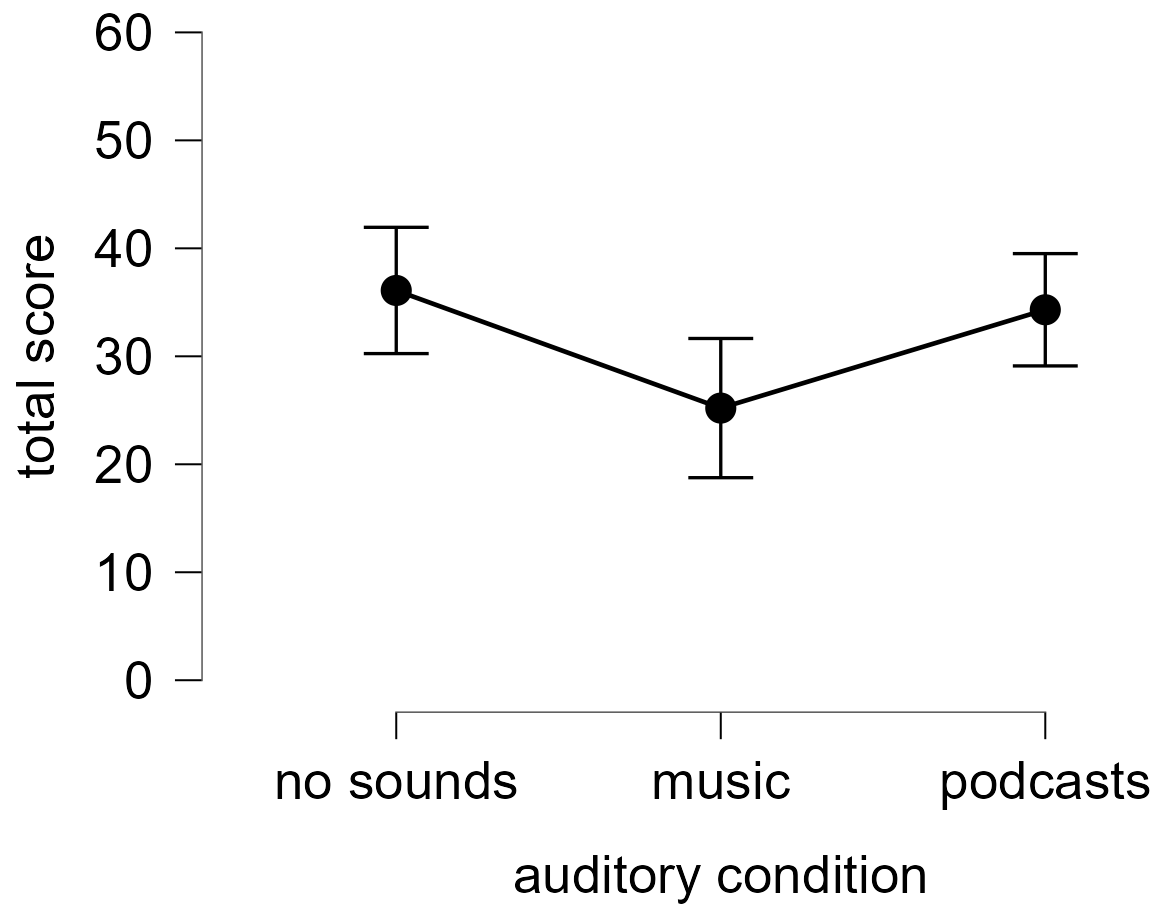
Music significantly reduced symptoms related to oculomotor strain and disorientation, as well as the overall SSQ total score, compared to the no-sound and podcast conditions.
There was no significant difference in nausea scores across conditions.
Interviews supported these results: Seventeen out of twenty-three participants preferred the ride with music, describing it as “relaxing”, “pleasant”, and providing “better immersion”.
Some noted that the rhythm matched the movement of the roller coaster, creating a coherent and enjoyable experience.
A smaller group preferred podcasts for distraction, while one participant favoured no sound in order to stay focused.
Objective findings:
Physiological data (EDA and HR) did not show significant differences between conditions.
However, observation revealed that most participants leaned into curves and actively looked around, suggesting strong engagement with the VR environment.
SSQ subscales for oculomotor, disorientation and total score
Discussion & Takeaways
The study demonstrated that listening to self-selected music can effectively reduce symptoms of VRS, particularly disorientation and oculomotor discomfort, compared to listening to podcasts or no sounds.
While podcasts did not produce significant improvements, the results suggest that music acts as a pleasant distraction, helping users to focus less on the conflicting sensory cues that cause discomfort.
The findings highlight the importance of emotional engagement and personal preference in mitigating VR sickness.
Familiar, enjoyable music can create positive associations and emotional immersion, redirecting attention away from sensory conflicts.
This research contributes to enhancing comfort and accessibility in VR experiences.
Integrating self-selected music provides an effortless, user-centred approach to making virtual environments more enjoyable in contexts such as entertainment, training and therapy.